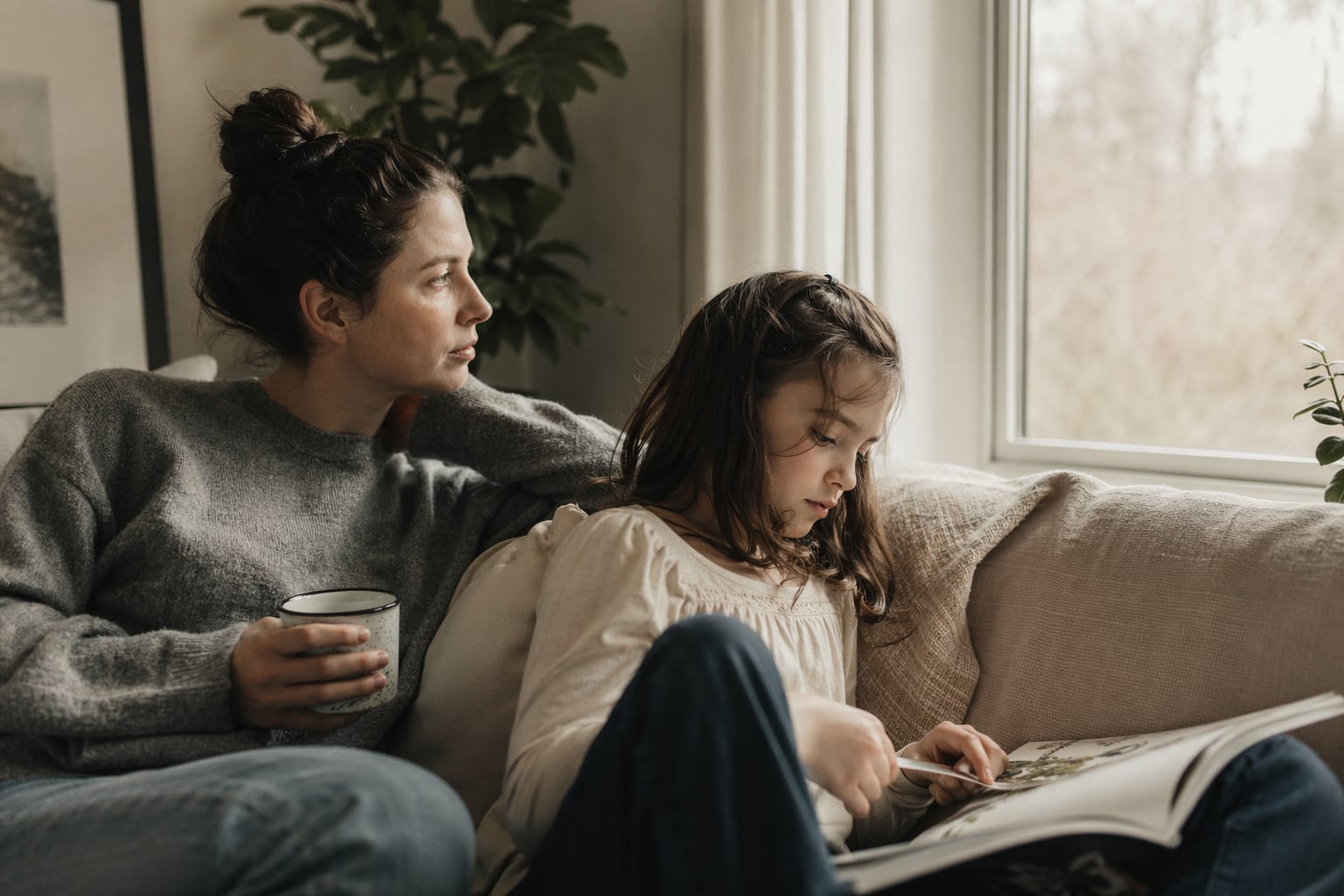
You already know your kids aren't okay. Maybe you see it in how your teenager has stopped talking. Maybe your seven-year-old is suddenly angry at small things. Maybe your oldest has quietly picked sides, and you're watching it happen and don't know how to stop it. You didn't imagine this. Divorce is one of the experiences childhood researchers call an Adverse Childhood Experience. It leaves a real, measurable mark on how kids develop, how they handle stress, how they trust.
Here's what that research also shows: the mark divorce leaves is shaped far less by the fact of the divorce than by what happens around it. High conflict between parents. Kids put in the middle. Alienation, even the unintentional kind. A child who has to manage an adult's emotions instead of having their own. Those are the things that cause the long-term damage. Those are the things that can be changed.
The work of protecting your kids through this isn't about hiding the divorce or pretending everything is fine. It's about specific, learnable skills: how to keep your kids out of the middle, how to stay connected when they're pulling away, how to build a two-home family that still feels like a family. Those skills are the course.